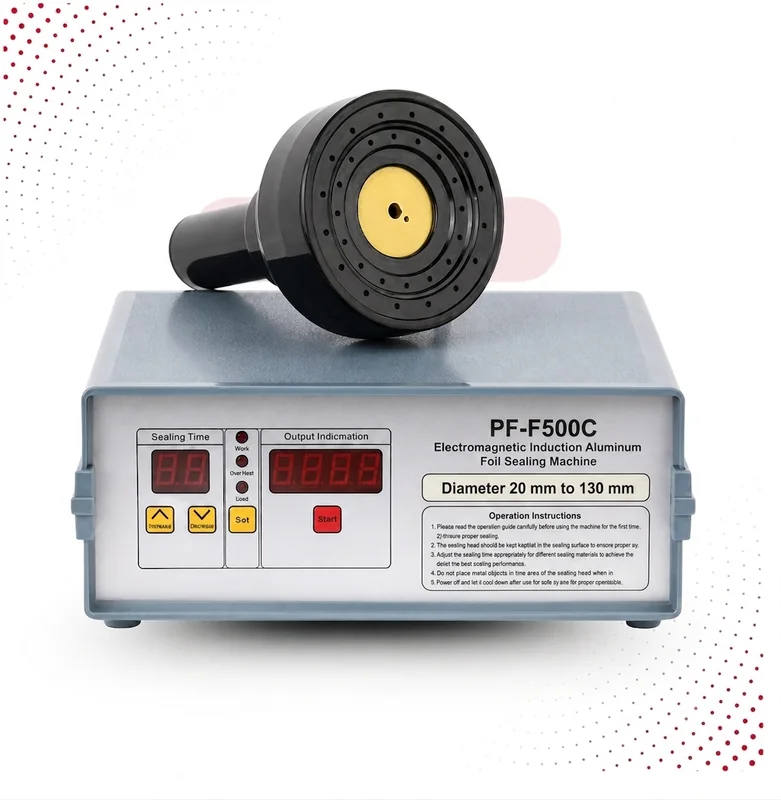
Made In India
PackForge Induction Sealing Machine 20-130 mm | Bottle Cap Foil Sealer
SKU: PF-IND-130
by PackForge ( Made in India )
₹9,499+ ₹1,710 GST₹14,180
Save ₹4,681 (33% OFF)
A plain, step-by-step routine for sealing bottles and jars with a hand-held induction sealer, from checking the cap liner to the peel test that tells you the setting is right. Written for the person who will run the machine every day.
Price + 18% GST · free delivery across India · Buy Now or Add to Cart
SKU: PF-IND-130
by PackForge ( Made in India )
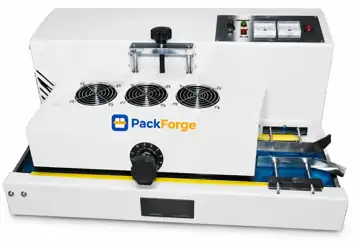
SKU: PF-IS200
by PackForge ( Made in India )
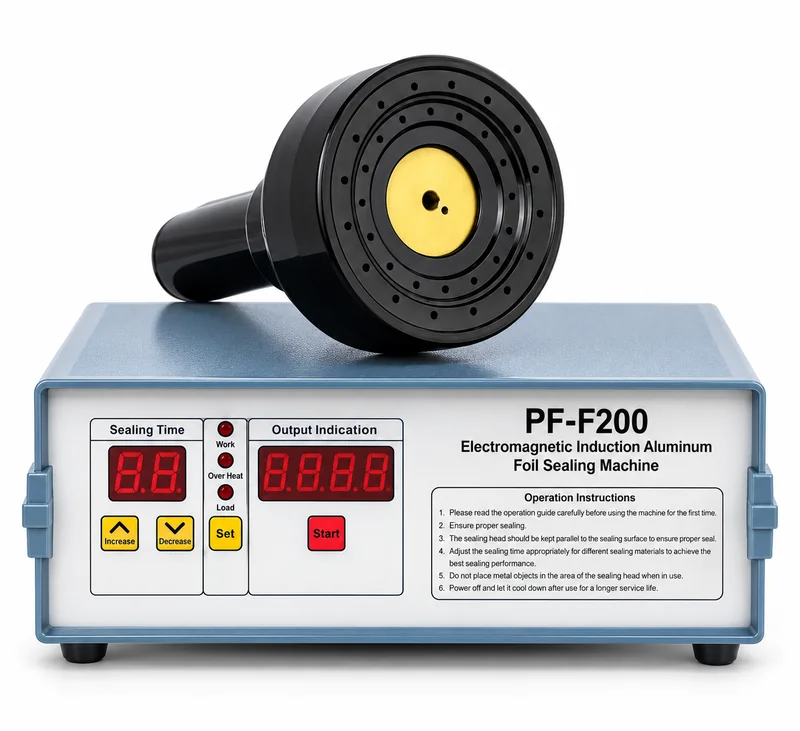
SKU: PF-IND-080-HD
by PackForge ( Made in India )
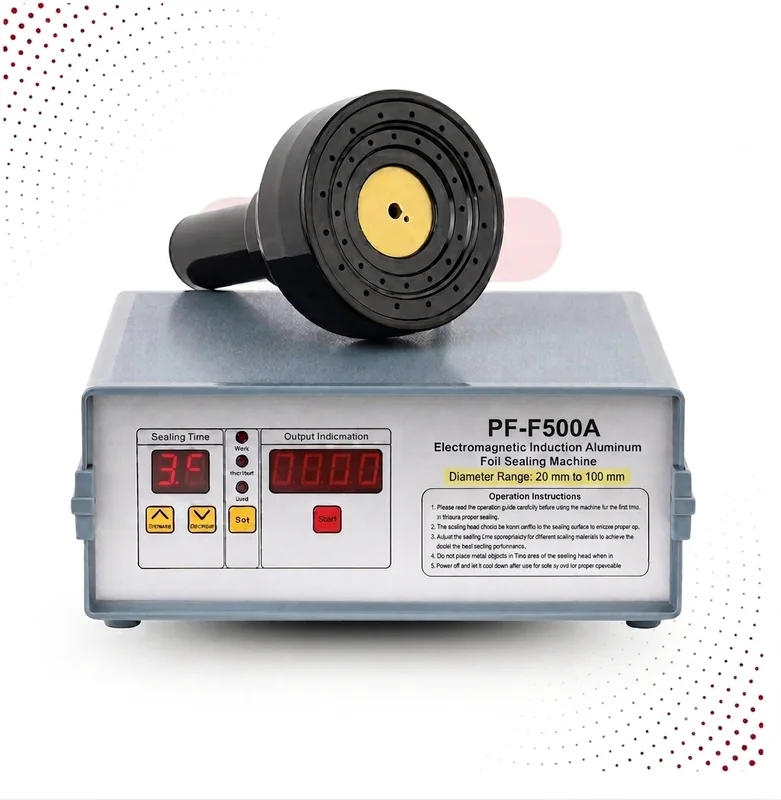
SKU: PF-IND-100-HD
by PackForge ( Made in India )
SKU: PF-IND-130-HD
by PackForge ( Made in India )
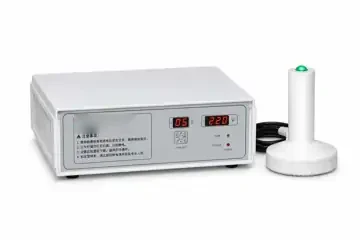
SKU: GEN-DGYF-600C
by Generic ( Made in India )
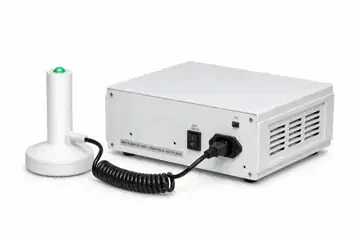
SKU: GEN-DGYF-200
by Generic ( Imported )
SKU: PF-IND-080
by PackForge ( Made in India )
SKU: PF-CL40P
by PackForge ( Made in India )
SKU: PF-ECS150
by PackForge ( Made in India )
An induction sealer does one job: it heats the thin aluminium layer of the liner inside a closed cap, and that layer bonds to the bottle mouth. It cannot tighten the cap and it cannot seal a cap that has no foil. So most of the work of a good seal happens before you press start.
Because the head goes to the bottle, there is no height to set. A short cream jar and a tall oil bottle are sealed the same way.
PackForge does not print one fixed time for every cap, because the right figure depends on the cap size, the liner and the bottle. Find it on your own bottles with this method:
Small caps heat quickly and are easy to over-heat. Wide caps of 100–130 mm need more time than a 28 mm bottle top. Keep one written setting per cap so every operator uses the same number. For how the foil and coat work, see how an induction sealing machine works.
All the hand-held models follow the routine above. The difference is in the cap range, the duty and how the time is controlled.
| Model | Caps | How it is used | Rate |
|---|---|---|---|
| PackForge IS100 Standard induction sealer | 20–80, 20–100 or 20–130 mm | Hand-held, digital timer, a few hundred bottles a day | from ₹4,999 + ₹900 GST |
| Heavy Duty induction sealing machine 20-80 mm | 20–80 mm | Hand-held, seals faster, made for long shifts | ₹7,999 + ₹1,440 GST |
| Heavy Duty induction sealing machine 20-130 mm | 20–130 mm | Hand-held, wide jars and tins | ₹12,999 + ₹2,340 GST |
| DGYF-200 semi automatic induction sealer | 20–80 mm | Place the head; the timer runs and stops the cycle by itself | ₹5,061 + ₹911 GST |
| IS200 continuous induction sealer | 20–130 mm | Bottles ride under the head on a conveyor, 2–12 m per minute | from ₹58,240 + ₹10,483 GST |
On the IS200, set the guides to the bottle and the conveyor speed to the cap size so each cap passes straight under the coil. Every rate is on the induction sealing machine price list.
| What you see | Likely cause | What to do |
|---|---|---|
| Foil not stuck at all | No induction liner, or time far too short | Check the liner has foil; raise the time |
| Foil stuck on one side only | Loose or tilted cap, head off centre | Tighten evenly; centre the head |
| Foil brown or cap soft | Time too long | Lower the time and test again |
| Good on some bottles, weak on others | Oil or syrup on the rim | Wipe rims after filling |
Every fault with its fix is on induction sealer not sealing, and the liners themselves are explained in the induction sealing foil wad guide.
At the end of each shift, switch off and wipe splashes of oil or syrup from the head with a dry cloth. Keep the bench dry. On the IS200, keep the conveyor belt clean and the guides set for the bottle.
If the display does not light after you have checked the socket, or the head stays cold on a cap you know seals, call +91 95822 69346 or send a short video on WhatsApp. Spares and upkeep plans are on spares and AMC, and the full range is on the induction sealer page.
Send a photo of your cap and bottle, the largest cap size and how many bottles you seal a day. We will tell you the model and help you set it up.
There is no single number. Start with a short time, seal one bottle, peel the foil, and raise the time a little until it comes away in one clean piece over the full rim. Write that setting down for each cap size.
Yes. The induction sealer does not tighten caps. Screw each cap on firmly and evenly by hand or with a capper first, because the foil bonds only where it is pressed flat on the rim.
No. On hand-held models the head is brought to the bottle, so short jars and tall bottles are sealed the same way with nothing to adjust.
Foil liner wala cap tight karein, machine on karke chhota time set karein, head ko cap ke beech mein seedha rakhein aur start dabayein. Ek bottle khol kar foil check karein aur zaroorat ho to time thoda badhayein.
No. Without the aluminium layer there is nothing for the field to heat. Ask your cap supplier for caps with an induction liner made for your bottle material.
The IS100 is rated 0 to 50 pieces a minute, depending on how fast the operator works. For bottles that come continuously on a line, the conveyor IS200 is the better fit.
Subscribe with your email for first-order offers, deals and new arrivals.
Main machines
Carton Sealing Machine|Impulse Sealer|Heat Sealing Machine|Hand Sealing Machine|Strapping Machines and Tools|Stretch Wrapping Machines|Continuous Band Sealing Machine|Cup Sealing Machine|Induction Sealing Machine|Handheld Inkjet Printer
By product range
Fully Automatic Strapping Machines|Semi Automatic Strapping Machines|Low Table Top Strapping Machines|Pneumatic Strapping Tools|PP Strap Rolls|Strapping Machine Spares|Semi Automatic Carton Sealing Machines|Compact Carton Sealing Machines|Automatic Random Carton Sealing Machines|BOPP Tape Rolls|Carton Sealer Spares|Box Wrapping Machines with Top Press|Turntable Stretch Wrappers|Stretch Film Rolls|Wrapping Machine Spares|Hydraulic Hand Pallet Trucks|Drum Carriers & Lifters|Pallet Truck Spares & Wheels|Material Handling Trolleys|Machine Spare Parts
Machines and consumables
Fully Automatic Strapping Machine, PP Strap, Touch HMI|Semi Automatic Strapping Machine, Arch Type, PP Strap|Low Table Top Semi-Automatic Strapping Machine, Compact|Pneumatic strapping tool, PP and PET strap|Machine-grade PP strap|Semi Automatic Carton Sealing Machine, Top & Bottom Tape|Compact Carton Sealing Machine for Small Cartons|Automatic Random Carton Sealing Machine, Auto Size Adjust|Box Wrapping Machine with Top Press, Turntable Stretch Wrapper|Turntable stretch wrapper|Hydraulic Hand Pallet Truck, 2.5 Ton Capacity, Nylon / PU Wheels|Material Handling Drum Carrier & Lifter, 350 kg Capacity|Platform trolleys
Hand sealing machines
Hand Sealer|Poly Bag Sealing Machine|Pouch Sealing Machine|Packet Sealing Machine|Plastic Bag Sealing Machine|Bag Sealing Machine|8 Inch Hand Sealing Machine|12 Inch Hand Sealing Machine|16 Inch Hand Sealing Machine|Foot Sealing Machine|Table Top Sealing Machine|How to Choose a Hand Sealing Machine|Hand Sealer or Band Sealer?
Bengaluru
Packaging Machines in Bengaluru|Carton Sealing Machine in Bengaluru|Hand Sealing Machine in Bengaluru|Cities We Supply
Mobile number must be a valid 10 digit number.
By continuing, you agree to PackForge's Terms & Conditions.
Popular Cities
More Cities
Our support team is here for you. Get in touch for quick assistance!
What do you need the machine to do?
Pick the job closest to yours.
We appoint distributors territory-wise across India and in African markets. Dealer pricing, demo machines and technical training are provided.
Genuine spares and annual maintenance contracts for every PackForge machine, handled by our own service engineers.
A factory quote comes back against the details you send. You are not obliged to order.
What is inside
Scan to ask for the catalogue on WhatsApp

PackForge Industries, a division of Fulcrum Infratech Pvt. Ltd. — Packaging, Sealing & Material Handling Machines
Get a callback and details from PackForge Industries on your mobile quickly.
Enter a valid 10 digit mobile number.
A plain, step-by-step routine for sealing bottles and jars with a hand-held induction sealer, from checking the cap liner to the peel test that tells you the setting is right. Written for the person who will run the machine every day.
Price + 18% GST · free delivery across India · Buy Now or Add to Cart
SKU: PF-IND-130
by PackForge ( Made in India )
SKU: PF-IS200
by PackForge ( Made in India )
SKU: PF-IND-080-HD
by PackForge ( Made in India )
SKU: PF-IND-100-HD
by PackForge ( Made in India )
SKU: PF-IND-130-HD
by PackForge ( Made in India )
SKU: GEN-DGYF-600C
by Generic ( Made in India )
SKU: GEN-DGYF-200
by Generic ( Imported )
SKU: PF-IND-080
by PackForge ( Made in India )
SKU: PF-CL40P
by PackForge ( Made in India )
SKU: PF-ECS150
by PackForge ( Made in India )
An induction sealer does one job: it heats the thin aluminium layer of the liner inside a closed cap, and that layer bonds to the bottle mouth. It cannot tighten the cap and it cannot seal a cap that has no foil. So most of the work of a good seal happens before you press start.
Because the head goes to the bottle, there is no height to set. A short cream jar and a tall oil bottle are sealed the same way.
PackForge does not print one fixed time for every cap, because the right figure depends on the cap size, the liner and the bottle. Find it on your own bottles with this method:
Small caps heat quickly and are easy to over-heat. Wide caps of 100–130 mm need more time than a 28 mm bottle top. Keep one written setting per cap so every operator uses the same number. For how the foil and coat work, see how an induction sealing machine works.
All the hand-held models follow the routine above. The difference is in the cap range, the duty and how the time is controlled.
| Model | Caps | How it is used | Rate |
|---|---|---|---|
| PackForge IS100 Standard induction sealer | 20–80, 20–100 or 20–130 mm | Hand-held, digital timer, a few hundred bottles a day | from ₹4,999 + ₹900 GST |
| Heavy Duty induction sealing machine 20-80 mm | 20–80 mm | Hand-held, seals faster, made for long shifts | ₹7,999 + ₹1,440 GST |
| Heavy Duty induction sealing machine 20-130 mm | 20–130 mm | Hand-held, wide jars and tins | ₹12,999 + ₹2,340 GST |
| DGYF-200 semi automatic induction sealer | 20–80 mm | Place the head; the timer runs and stops the cycle by itself | ₹5,061 + ₹911 GST |
| IS200 continuous induction sealer | 20–130 mm | Bottles ride under the head on a conveyor, 2–12 m per minute | from ₹58,240 + ₹10,483 GST |
On the IS200, set the guides to the bottle and the conveyor speed to the cap size so each cap passes straight under the coil. Every rate is on the induction sealing machine price list.
| What you see | Likely cause | What to do |
|---|---|---|
| Foil not stuck at all | No induction liner, or time far too short | Check the liner has foil; raise the time |
| Foil stuck on one side only | Loose or tilted cap, head off centre | Tighten evenly; centre the head |
| Foil brown or cap soft | Time too long | Lower the time and test again |
| Good on some bottles, weak on others | Oil or syrup on the rim | Wipe rims after filling |
Every fault with its fix is on induction sealer not sealing, and the liners themselves are explained in the induction sealing foil wad guide.
At the end of each shift, switch off and wipe splashes of oil or syrup from the head with a dry cloth. Keep the bench dry. On the IS200, keep the conveyor belt clean and the guides set for the bottle.
If the display does not light after you have checked the socket, or the head stays cold on a cap you know seals, call +91 95822 69346 or send a short video on WhatsApp. Spares and upkeep plans are on spares and AMC, and the full range is on the induction sealer page.
Send a photo of your cap and bottle, the largest cap size and how many bottles you seal a day. We will tell you the model and help you set it up.
There is no single number. Start with a short time, seal one bottle, peel the foil, and raise the time a little until it comes away in one clean piece over the full rim. Write that setting down for each cap size.
Yes. The induction sealer does not tighten caps. Screw each cap on firmly and evenly by hand or with a capper first, because the foil bonds only where it is pressed flat on the rim.
No. On hand-held models the head is brought to the bottle, so short jars and tall bottles are sealed the same way with nothing to adjust.
Foil liner wala cap tight karein, machine on karke chhota time set karein, head ko cap ke beech mein seedha rakhein aur start dabayein. Ek bottle khol kar foil check karein aur zaroorat ho to time thoda badhayein.
No. Without the aluminium layer there is nothing for the field to heat. Ask your cap supplier for caps with an induction liner made for your bottle material.
The IS100 is rated 0 to 50 pieces a minute, depending on how fast the operator works. For bottles that come continuously on a line, the conveyor IS200 is the better fit.
Subscribe with your email for first-order offers, deals and new arrivals.
Mobile number must be a valid 10 digit number.
By continuing, you agree to PackForge's Terms & Conditions.
Popular Cities
More Cities
Our support team is here for you. Get in touch for quick assistance!
We appoint distributors territory-wise across India and in African markets. Dealer pricing, demo machines and technical training are provided.
Genuine spares and annual maintenance contracts for every PackForge machine, handled by our own service engineers.
A factory quote comes back against the details you send. You are not obliged to order.
What is inside
Scan to ask for the catalogue on WhatsApp