A warranty is a promise about manufacture, not a promise that nothing will ever wear out. This page sets out exactly which of the two you are covered for, how a claim is made, and what makes a claim fail — which is the part most warranty pages leave vague.
Your warranty period. Every machine we sell carries a minimum warranty of 12 months (1 year) from the invoice date against manufacturing defects. PackForge impulse sealers: the Standard model carries a 2 year warranty and the Heavy Duty model a 5 year warranty. Where another machine carries a longer period, it is stated on the product page, your quotation and your invoice.
What the warranty covers
Defects in material and workmanship in the machine as we supplied it. In practice that means a component that fails because it was faulty or wrongly assembled, not one that has worn out in normal use.
For the machines designed, assembled and run-tested at our own works in Faridabad, the claim is settled by us directly. For the PackForge models, it is handled by Fulcrum Infratech Pvt. Ltd. For the lines we buy in — office, safety and bags — we take the claim to the manufacturer on your behalf rather than sending you to them, and the terms are theirs.
What it does not cover
Said plainly, because a warranty page that hides its exclusions is not a warranty page:
Wear parts. Heater blades, cutters, belts, rollers, seals, element wire and similar are consumable by design. They are stocked, and they are not warranty items.
Consumables. Strap, tape, film and stretch wrap are what the machine uses, not part of the machine.
Damage from supply faults. A voltage spike, a phase failure or wet compressed air will damage a control board, and no manufacturer covers the power supply at your site.
Misuse and overload. Running a machine outside the pack size, weight or duty on its datasheet.
Unauthorised modification. A machine rewired or fitted with another supplier's part is no longer the machine we warranted. Ask before you change something; we will usually say yes and tell you how.
Transit damage. That is a freight claim, not a warranty claim, and it is handled differently — see the returns page.
How to make a claim
Report it as soon as you see it. A machine that is developing a fault and is kept running will often damage something else, and that second failure may not be covered.
Send the invoice or order reference, a photograph of the machine's serial plate, a description of what the machine is doing rather than what you think has failed, and a photograph or short video of the fault.
Most claims on our own machines are settled by sending a part, because most faults do not need a visit. If it does need one, we will say so.
Use the consumable the machine was specified around, or tell us when you change it. A strapping machine set for one PP strap thickness will misbehave on another, and that is not a fault.
Keep the machine clean, particularly around the sealing and cutting area, where debris causes far more faults than components do. Replace wear parts before they fail rather than after — a blade that is worn out does not just seal badly; it loads the mechanism around it.
Why the terms differ by line
The 12-month minimum applies to machines. Consumables, wear parts and the bought-in office, safety and bag items are covered by the terms on your invoice.
On the machines built here, we control the design, the assembly and the run-test, so we can stand behind the whole machine. On the PackForge models the manufacturer is Fulcrum Infratech Pvt. Ltd. and the terms are theirs — the same company, but a different set of documents. On the bought-in ranges the terms belong to whoever made the item, and we handle the claim with them rather than sending you to them.
You will find your terms on your quotation and your invoice. If a claim ever depends on which of those three applies, we will tell you which one and why rather than leaving you to work it out.
Keeping the record you will need
A warranty claim two years in is settled by paperwork, and it is worth five minutes now. Photograph the serial plate when the machine arrives and keep the photograph with the invoice — plates get painted over, covered by a guard, or worn illegible by cleaning.
Keep the order acknowledgement, the invoice and any commissioning record together. If you have a maintenance log, note wear-part replacements in it; a machine with a maintenance history is a machine whose claim is straightforward.
None of this is a condition of the warranty. It is simply what makes a claim take a day instead of a fortnight.
Something failed?
Send the order reference, the serial plate and a photograph of the fault to +91 95822 69346.
A minimum of 12 months (1 year) from the invoice date on every machine. A longer period, where it applies, is on your quotation and invoice. If you cannot find the document, give us the order reference and we will tell you.
Does the warranty cover the heater blade?
No. A heater blade is a wear part by design and is stocked as one. If a blade fails in the first few days that is a different conversation — tell us and we will look at it.
I bought through a distributor. Who handles my claim?
You can come to us directly. The warranty terms are the same whether you bought direct or through a distributor.
Does opening the panel void the warranty?
Routine maintenance access does not. Rewiring, changing components or fitting another supplier's part without telling us does. Ask first — the answer is usually yes.
Is the warranty different for exported machines?
The terms are stated on the export quotation, because getting a part to another country is a different exercise from getting one across India.
Does the warranty transfer if we sell the machine?
Ask us. It depends on the line and on how much of the term is left; we will give you a straight answer rather than a refusal.
We run three shifts. Does that affect the warranty?
It affects wear-part life far more than it affects the warranty. Tell us the duty at the enquiry stage so the machine is specified for it in the first place.
A warranty is a promise about manufacture, not a promise that nothing will ever wear out. This page sets out exactly which of the two you are covered for, how a claim is made, and what makes a claim fail — which is the part most warranty pages leave vague.
Your warranty period. Every machine we sell carries a minimum warranty of 12 months (1 year) from the invoice date against manufacturing defects. PackForge impulse sealers: the Standard model carries a 2 year warranty and the Heavy Duty model a 5 year warranty. Where another machine carries a longer period, it is stated on the product page, your quotation and your invoice.
What the warranty covers
Defects in material and workmanship in the machine as we supplied it. In practice that means a component that fails because it was faulty or wrongly assembled, not one that has worn out in normal use.
For the machines designed, assembled and run-tested at our own works in Faridabad, the claim is settled by us directly. For the PackForge models, it is handled by Fulcrum Infratech Pvt. Ltd. For the lines we buy in — office, safety and bags — we take the claim to the manufacturer on your behalf rather than sending you to them, and the terms are theirs.
What it does not cover
Said plainly, because a warranty page that hides its exclusions is not a warranty page:
Wear parts. Heater blades, cutters, belts, rollers, seals, element wire and similar are consumable by design. They are stocked, and they are not warranty items.
Consumables. Strap, tape, film and stretch wrap are what the machine uses, not part of the machine.
Damage from supply faults. A voltage spike, a phase failure or wet compressed air will damage a control board, and no manufacturer covers the power supply at your site.
Misuse and overload. Running a machine outside the pack size, weight or duty on its datasheet.
Unauthorised modification. A machine rewired or fitted with another supplier's part is no longer the machine we warranted. Ask before you change something; we will usually say yes and tell you how.
Transit damage. That is a freight claim, not a warranty claim, and it is handled differently — see the returns page.
How to make a claim
Report it as soon as you see it. A machine that is developing a fault and is kept running will often damage something else, and that second failure may not be covered.
Send the invoice or order reference, a photograph of the machine's serial plate, a description of what the machine is doing rather than what you think has failed, and a photograph or short video of the fault.
Most claims on our own machines are settled by sending a part, because most faults do not need a visit. If it does need one, we will say so.
Use the consumable the machine was specified around, or tell us when you change it. A strapping machine set for one PP strap thickness will misbehave on another, and that is not a fault.
Keep the machine clean, particularly around the sealing and cutting area, where debris causes far more faults than components do. Replace wear parts before they fail rather than after — a blade that is worn out does not just seal badly; it loads the mechanism around it.
Why the terms differ by line
The 12-month minimum applies to machines. Consumables, wear parts and the bought-in office, safety and bag items are covered by the terms on your invoice.
On the machines built here, we control the design, the assembly and the run-test, so we can stand behind the whole machine. On the PackForge models the manufacturer is Fulcrum Infratech Pvt. Ltd. and the terms are theirs — the same company, but a different set of documents. On the bought-in ranges the terms belong to whoever made the item, and we handle the claim with them rather than sending you to them.
You will find your terms on your quotation and your invoice. If a claim ever depends on which of those three applies, we will tell you which one and why rather than leaving you to work it out.
Keeping the record you will need
A warranty claim two years in is settled by paperwork, and it is worth five minutes now. Photograph the serial plate when the machine arrives and keep the photograph with the invoice — plates get painted over, covered by a guard, or worn illegible by cleaning.
Keep the order acknowledgement, the invoice and any commissioning record together. If you have a maintenance log, note wear-part replacements in it; a machine with a maintenance history is a machine whose claim is straightforward.
None of this is a condition of the warranty. It is simply what makes a claim take a day instead of a fortnight.
Questions we are asked
What is my warranty period?
A minimum of 12 months (1 year) from the invoice date on every machine. A longer period, where it applies, is on your quotation and invoice. If you cannot find the document, give us the order reference and we will tell you.
Does the warranty cover the heater blade?
No. A heater blade is a wear part by design and is stocked as one. If a blade fails in the first few days that is a different conversation — tell us and we will look at it.
I bought through a distributor. Who handles my claim?
You can come to us directly. The warranty terms are the same whether you bought direct or through a distributor.
Does opening the panel void the warranty?
Routine maintenance access does not. Rewiring, changing components or fitting another supplier's part without telling us does. Ask first — the answer is usually yes.
Is the warranty different for exported machines?
The terms are stated on the export quotation, because getting a part to another country is a different exercise from getting one across India.
Does the warranty transfer if we sell the machine?
Ask us. It depends on the line and on how much of the term is left; we will give you a straight answer rather than a refusal.
We run three shifts. Does that affect the warranty?
It affects wear-part life far more than it affects the warranty. Tell us the duty at the enquiry stage so the machine is specified for it in the first place.
Something failed?
Send the order reference, the serial plate and a photograph of the fault to +91 95822 69346.
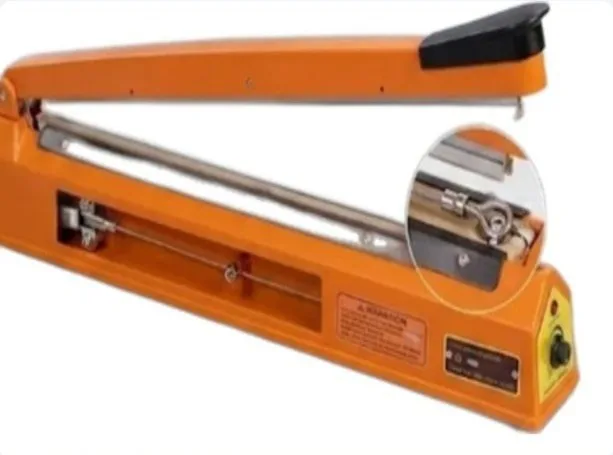
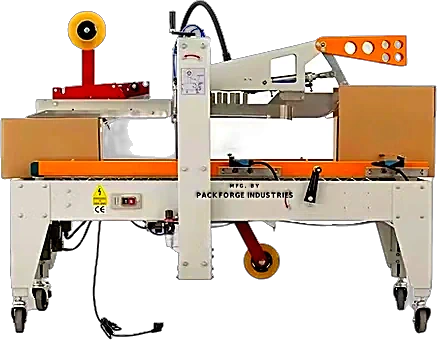
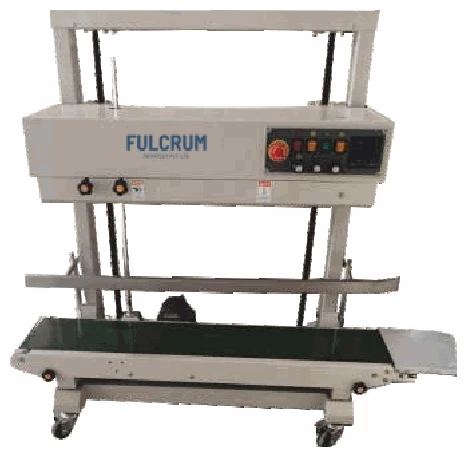 PackForge CS1100 10 KG Band Sealer | Heavy Pouch Sealing Machine
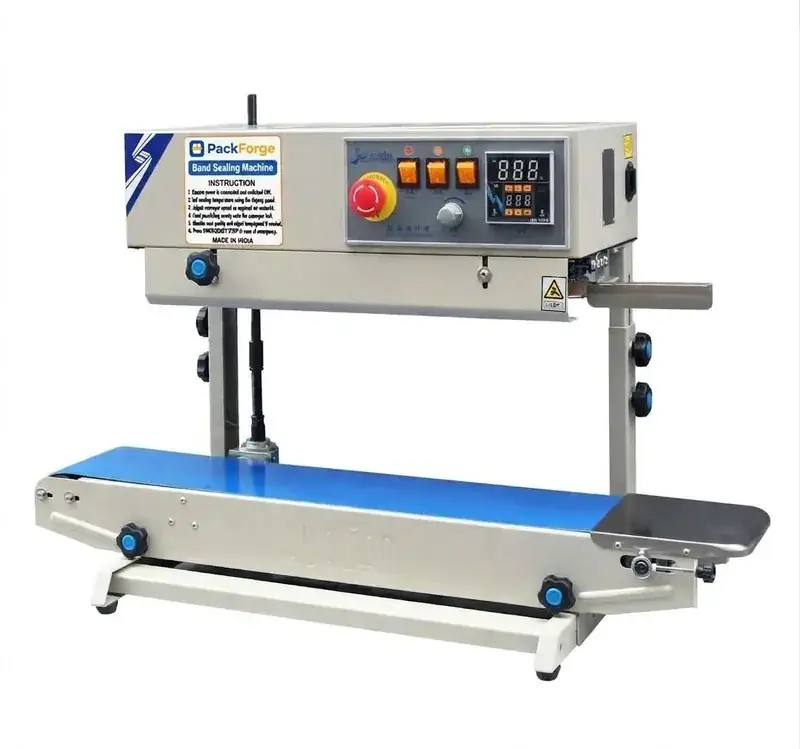 PackForge CS1680 Heavy Duty Continuous Band Sealer
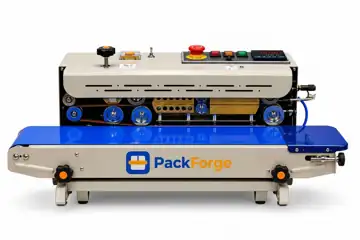 PackForge CS900 Continuous Band Sealer | Horizontal & Vertical Pouch Sealing Machine
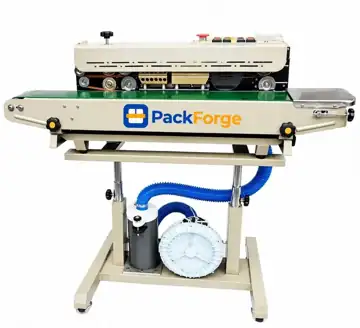 PackForge CS900AF Air Flushing Continuous Band Sealer
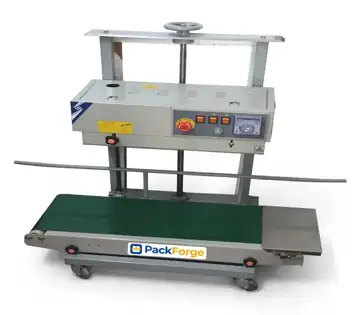 PackForge CS900LW / VW Wide Conveyor Band Sealer
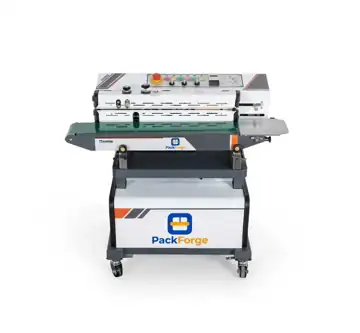 PackForge CVS900 Gas Flushing / Vacuum Band Sealer
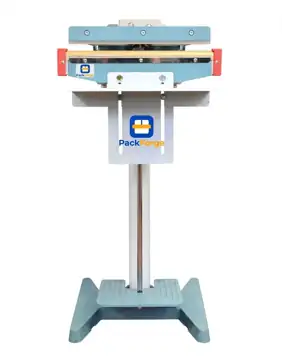 PackForge FS Series Foot Operated Impulse Sealer | Pedal Sealing Machine
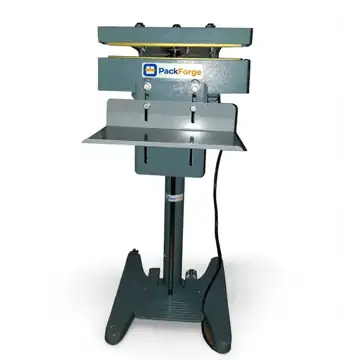 PackForge FS300D / 400D Hot Bar Foot Sealer | 300 & 400 mm
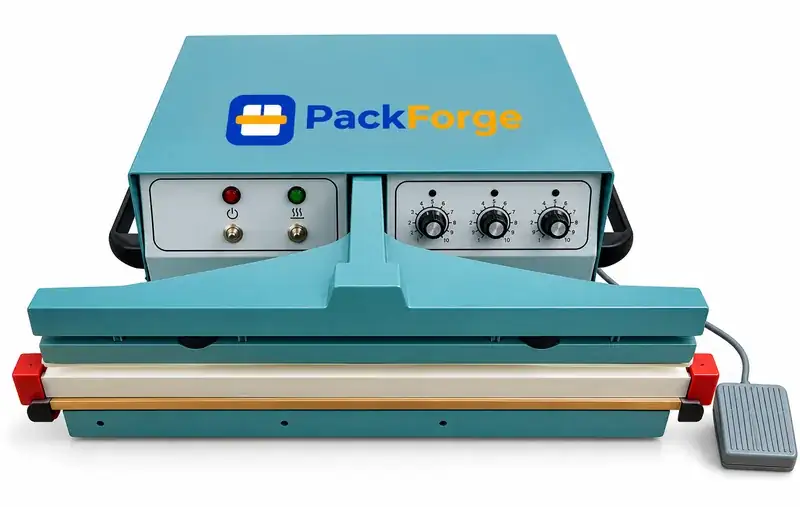 PackForge FS450T / 600T Table Top Impulse Sealer | 450 & 600 mm
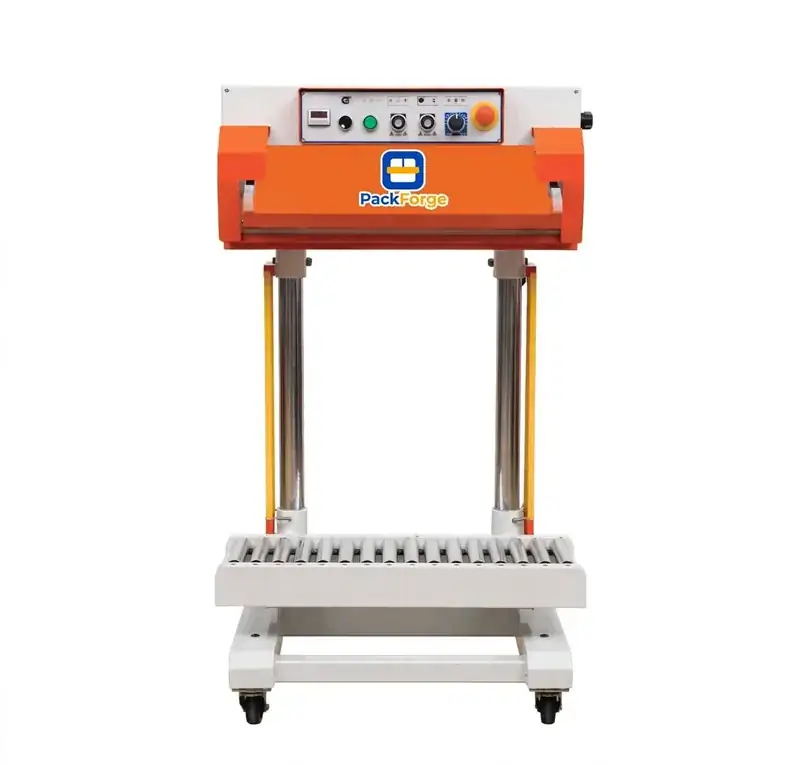 PackForge PS700A Pneumatic Sealing Machine | Heavy Bag Sealer
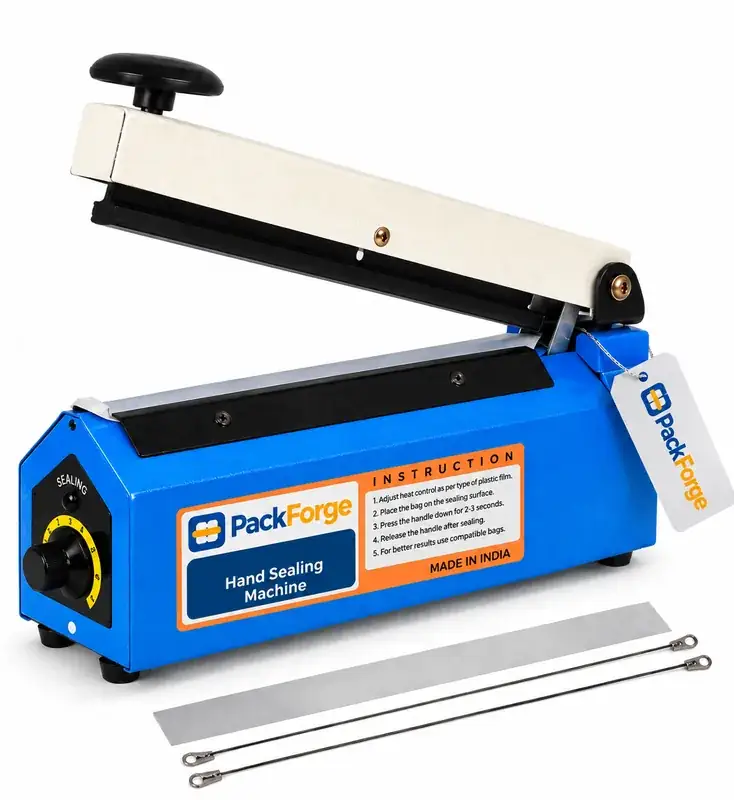 PackForge 12 Inch (300 MM) Impulse Sealer Machine | Packet Sealing Machine for Food & Plastic Bags
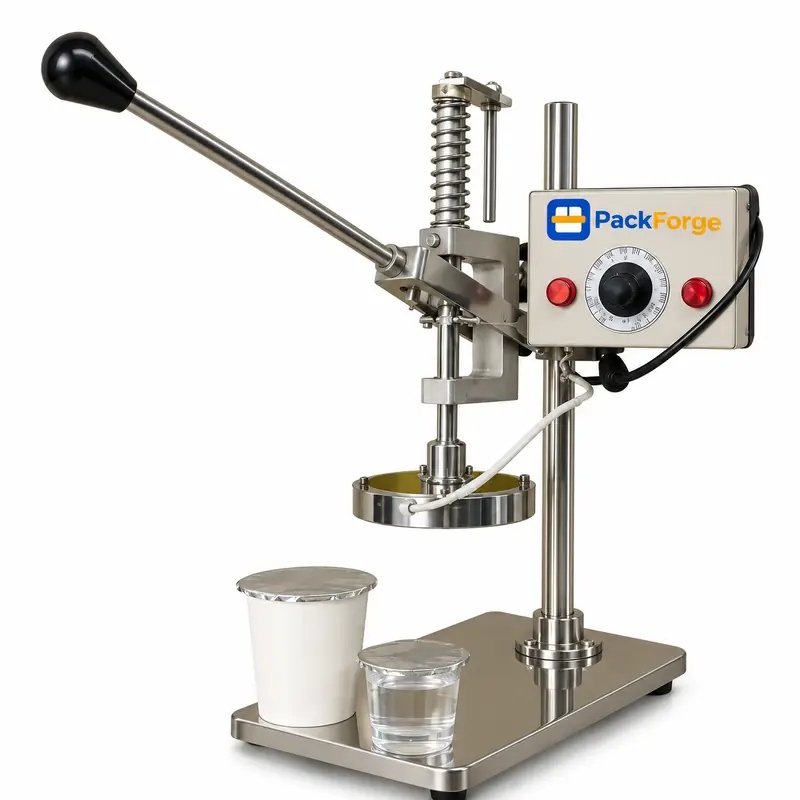 PackForge Manual Cup Sealing Machine
