Carton Sealing Machine Manual
Lost the booklet, or took over a machine with no papers? This page gathers the published settings, safety rules, care routine and wear parts for each PackForge carton sealer in one place.
What this page covers, and what it does not
Think of it as the reference section of a manual: numbers, parts and rules you look up, not a lesson. For the operating sequence from switch-on to the first sealed box, follow our guide on how to use a carton sealer. For cleaning and inspection routines in depth, see carton sealer maintenance.
No manual files are posted on the site. Documents are issued on request so that you always receive the current version for your model, as explained on our downloads page.
Safety rules for every carton sealer
- Isolate before you reach in. Unplug the machine for any setting change, tape loading, cleaning or part change. On air-driven models, also close the air valve and let the pressure fall to zero.
- Respect the cutter. Each tape head carries a serrated blade under a spring-loaded guard. The guard must return over the teeth by itself; never tie, tape or remove it.
- Hands off moving belts. Feed cartons from the infeed end only and never reach between running side belts to straighten a box.
- One person on the switch. Whoever is working on the head decides when power goes back on.
- Proper supply. The final connection to your socket or panel is site work for your own electrician, matched to the voltage on the serial plate.
- Level floor. A machine standing unevenly feeds cartons crooked, and the fault can look like a tape problem for weeks.
Model-wise carton size, tape width and supply
These figures are from each model's published specification. A dash means the figure is not listed; send your carton and we will confirm.
| Model | Carton size window | Tape width | Power and air |
|---|---|---|---|
| Compact (PF-CCS-01) | Small cartons | — | 230 V single phase, approx. 0.2 kW |
| Semi automatic (PF-SAC-01) | — | — | 230 V single phase, approx. 0.24 kW |
| 102TUS | 80 to 90 mm up to 500 x 500 mm | 36 or 48 mm | 220 V / 50 Hz, 200 W |
| 102TU | L150 x W170 x H110 mm up to W500 x H500 mm | 50 or 76 mm | 1 phase, 110 / 220 / 240 V |
| 102TR | 180 x 100 mm up to 500 x 500 mm | 48, 60 or 76 mm | 220 V, 220 W; air 2 / 3 litre at 5 bar |
| 5050Z | 180 x 180 x 160 mm up to 600 x 500 x 500 mm | 48, 60 or 76 mm | 220 V / 50 Hz or 110 V / 60 Hz, 260 W; air 0.4 to 0.6 MPa |
| Auto size adjust (PF-ARC-01) | — | — | 230 V, approx. 0.4 kW; air 5 to 6 bar |
| 102PLS | L150 x W135 x H130 mm up to W500 x H500 mm | 50 or 76 mm | 1 phase, 110 / 220 / 240 V |
| 5050J | 320 x 200 x 180 mm up to 500 x 500 x 500 mm | 60 or 76 mm | 220 V / 50 Hz or 110 V / 60 Hz, 850 W; air 0.5 to 0.6 MPa |
Table height, rated speed and tape types
| Model | Working table height | Rated speed | Tape types listed |
|---|---|---|---|
| Compact | — | 18 to 20 m per minute, about 800 to 1,000 cartons an hour | BOPP |
| Semi automatic | Approx. 580 to 780 mm | About 20 m per minute, 800 to 1,200 cartons an hour | — |
| 102TUS | 580 to 780 mm | 20 m per minute | — |
| 102TU | 570 to 770 mm | 20 cartons per minute | — |
| 102TR | 600 to 780 mm | 24 m per minute | BOPP, PVC, water free |
| 5050Z | 600 to 750 mm | 22 m per minute, 25 cartons per minute | BOPP, PVC |
| Auto size adjust | — | 500 to 700 mixed cartons an hour | — |
| 102PLS | 570 to 770 mm | 20 cartons per minute | — |
| 5050J | 750 mm | — | BOPP, PVC, water free |
Speeds are rated figures; real output depends on how fast cartons are filled and fed.
Carton sealer manual: the main parts and what they do
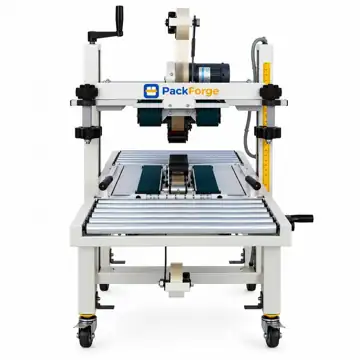
- Infeed and outfeed roller tables: carry the carton in and out at working height.
- Side guides with drive belts: grip the carton and pull it through. On fixed-size models a crank or handle sets their width.
- Top head lift: raises or lowers the upper tape head to carton height, with a lock to hold it.
- Top and bottom tape heads: each holds a tape roll on a hub, guide rollers, a one-way roller, a tension adjuster, a front applying roller, the cutter blade with its guard, and a rear wipe-down roller.
- Motor and switch box: drive the belts; the serial plate nearby gives model, supply and serial number.
- Air unit on pneumatic models: filter, regulator and gauge feeding the cylinders that move the guides, the head or the flap folder.
On the 5050Z a flap folder sits ahead of the head, and on the 102PLS a strapping arch follows it.
Settings that matter, in brief
- Width: belts touching the carton sides lightly. Too wide and the tape wanders off the seam.
- Height: top head resting on the closed flaps, then locked.
- Tension: tape lying flat without stretching; change it in small steps.
- Tape width: a roll matching what the head was built for, as listed above.
- Table height: set for the operator, or to meet an existing conveyor.
When a machine is commissioned, write the working settings on a sheet and keep it at the bench. When something drifts, that sheet is what you return to.
Care schedule: daily, weekly and by condition
| When | Task | Who |
|---|---|---|
| Every shift | Clean glue off the blade teeth and rollers, with power off | Operator |
| Every shift, air models | Read the gauge against the listed pressure | Operator |
| Weekly | Clear dust and tape scraps from belts and the bed; drain the air filter | Operator or fitter |
| Weekly | Spin each roller by hand and check the blade guard returns | Fitter |
| By condition | Replace a blade that tears after cleaning, glazed or cracked belts, flat-spotted rollers | Fitter |
| After any move | Level the machine again and re-check settings | Fitter |
Extra checks on air-driven models
The 102TR, the auto size adjust random sealer, the 5050Z and the 5050J need compressed air. Low or unsteady pressure shows up as slow size setting, a weak flap fold, or a seal that looks fine and fails later. Feed them dry, filtered air: wet air damages control parts and is not covered by warranty. Note the line pressure at the machine, not only at the compressor, especially when the hose is long or other machines share the supply. Air faults and their fixes are listed in our carton sealer troubleshooting guide.

Wear part list for PackForge carton sealers
Three groups wear, in a predictable order:
- Tape head: cutter blade, front and rear rollers, blade arm spring, and the complete head assembly when a rebuild is not worth it.
- Drive: side belts, top drive parts and the rollers they run on.
- Electricals: switches, sensors and boards.
Blades, rollers and belts are wear items outside the 12-month manufacturing warranty. Order them from carton sealer spares with the model name and a photo of the old part. Ask for the spare parts list for your model too: it gives part names as they appear on the machine, so your stores can order without guessing.
Using this page with an FXJ 6050 or another make
FXJ 6050 is a common name for a generic side-belt carton sealer sold by many suppliers. PackForge machines are not FXJ units, but the layout is similar: two side belts, top and bottom heads, cranks for width and height. The safety rules, part names and care schedule here apply to most box taping machines and packing tape machines of that type.
The numbers do not carry over. Size window, tape width and supply must come from the plate and papers of the machine in front of you. For parts, send the model plate and a photo, and we will tell you whether ours fit.
How do you get the operating manual for your model?
- Find the model or SKU on the serial plate or your invoice, such as PF-102TU or PF-SAC-01.
- WhatsApp it to +91 95822 69346 with a photo of the plate.
- Say whether you also need the datasheet, the spare parts list, installation notes or electrical details.
Documents go to the email address or WhatsApp number you give, usually the same working day. Keep a printed copy at the machine rather than in an office drawer, where nobody reads it.
Questions buyers ask
Where can I get the carton sealer manual for my PackForge machine?
WhatsApp the model or SKU and a photo of the serial plate to +91 95822 69346. The operating manual for that model is sent to your email or WhatsApp, usually the same working day.
Can I download the manual from the website?
No manual files are posted on the site. Documents are issued on request so that you receive the current version for your exact model rather than an old copy saved months ago.
Manual kho gaya hai, machine ka model kaise pata karein?
Machine par lagi serial plate dekhiye, us par model aur SKU likha hota hai. Plate na mile to invoice dekhiye, ya machine ki photo WhatsApp kar dijiye, hum model bata denge.
Does this page work as an FXJ 6050 manual?
Partly. Safety rules, part names and the care routine apply to most side-belt sealers, including FXJ 6050 type machines. Size limits, tape width and supply must come from that machine's own plate.
What tape width does my carton sealer take?
It depends on the model: 36 or 48 mm on the 102TUS, 50 or 76 mm on the 102TU and 102PLS, 48, 60 or 76 mm on the 102TR and 5050Z, and 60 or 76 mm on the 5050J.
Which carton sealers need an air compressor?
The 102TR, the auto size adjust random sealer, the 5050Z and the 5050J. The compact, semi automatic, 102TUS, 102TU and 102PLS run on electricity alone, as their specifications list no air supply.
Is there a carton packing machine manual in Hindi?
Ask when you request the manual. Our Hindi guide on running a sealer covers the basic operation, and our team can talk your operator through the settings by phone in Hindi.
Need the manual for your model?
WhatsApp the model or SKU and a serial plate photo to +91 95822 69346, or call +91 98184 38346, Monday to Saturday, 9:30 AM to 6:30 PM.
More on carton sealing machines
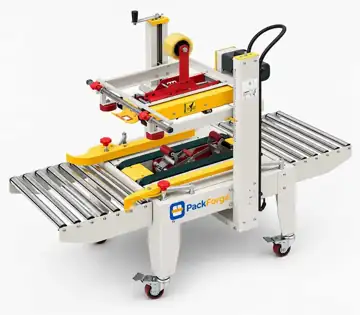 PackForge Automatic Random Carton Sealing Machine, Auto Size Adjust
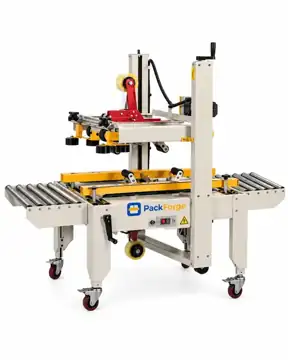 PackForge Compact Carton Sealing Machine for Small Cartons
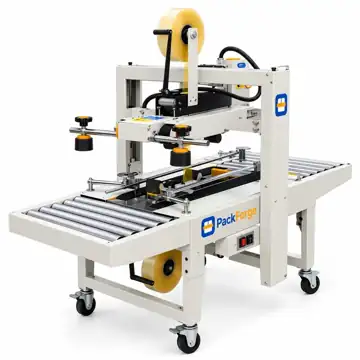 PackForge 102TR Pneumatic Automatic Carton Sealer
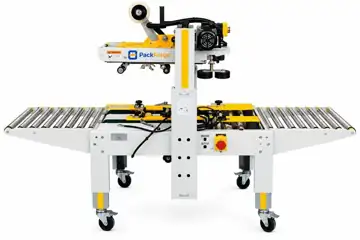 PackForge 102TU Carton Sealer (Standard Carton)
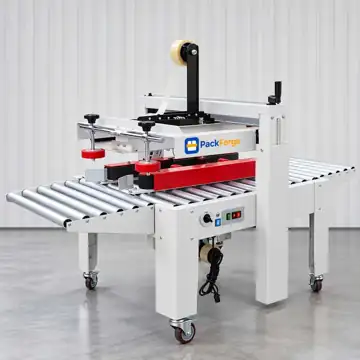 PackForge 102TUS Carton Sealer (Smaller Cartons)
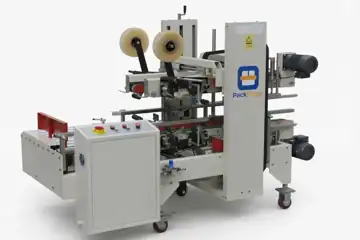 PackForge 5050J Carton Edge Sealing Machine
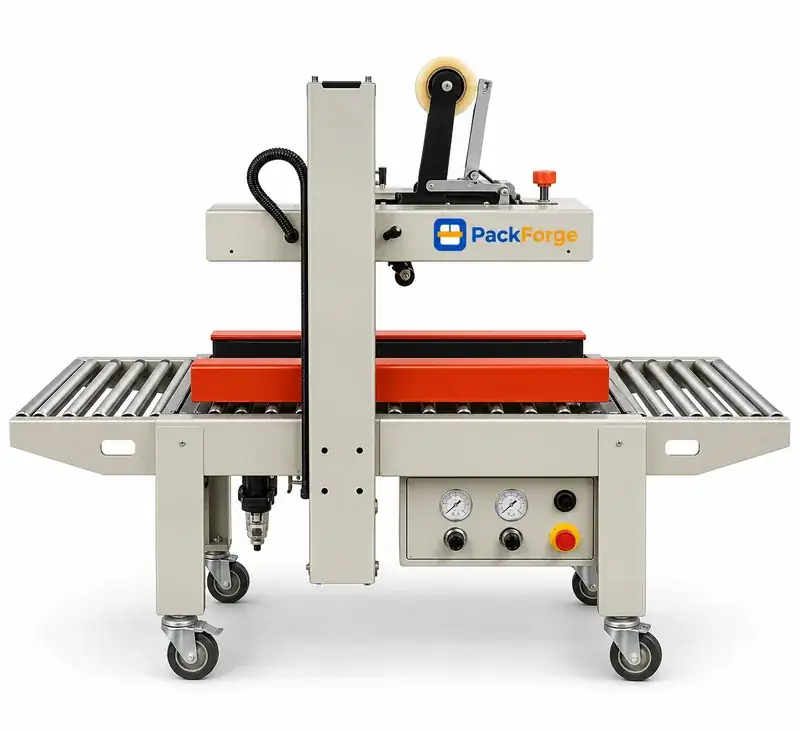 PackForge 5050Z Carton Sealer with Flap Folder
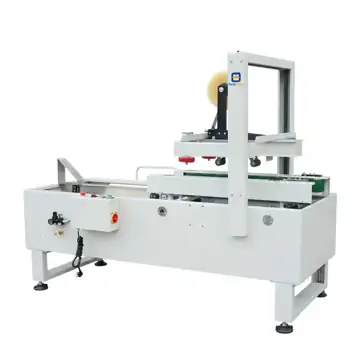 PackForge Semi Automatic Carton Sealing Machine, Top & Bottom Tape