Carton Sealer Blade Replacement
The cutter is the smallest working part on a carton sealer and the one most likely to stop a packing bench. Here is how to tell when it is finished, how to change it without cutting a hand, and what else in the tape head to check at the same time.
What does the blade do in a carton sealer tape head?
Each carton sealing machine has two tape heads, one above the carton and one set into the bed below, and each head has its own cutter. While the box moves through, tape is laid along the seam. As the trailing edge passes, the blade arm swings in, the serrated teeth pierce the tape and it snaps cleanly, and a rear roller wipes the tail down the back face.
Between cartons a spring-loaded guard covers the teeth. That guard is a safety part, not a cover for dust, and it is checked every time the blade is touched.
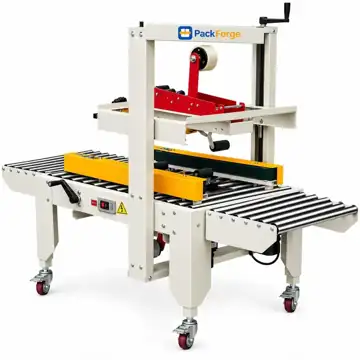
How do you know the blade is blunt?
Glue builds up on the teeth and makes a sharp blade behave like a dull one, so clean first and judge second. Use a cloth with an adhesive remover that is safe on metal, with power off.
| What you see | Most likely cause | What to do |
|---|---|---|
| Fringed or ragged tape ends | Worn or chipped teeth | Clean; if no better, replace the blade |
| Tape stretches into a long tail before it breaks | Blunt teeth or a weak blade arm spring | Check spring return, then the blade |
| Tape not cut at all, carton drags a tail | Glue-clogged teeth or a sticking blade arm | Clean teeth and pivot, test again |
| Rear leg pulled loose after cutting | Slow cut tugging the tape, or a worn rear roller | Check blade and rear roller together |
| Clean cut on one head, poor on the other | Uneven wear between heads | Treat each head separately |
If the cut stays poor after a good clean and the spring snaps back firmly, the blade is finished.
Safety before you touch the blade
- Switch off and pull the plug. A switch can be knocked on; an unplugged machine cannot start.
- On the 102TR, the auto size adjust model, the 5050Z and the 5050J, close the air valve and let the gauge fall to zero, since cylinders can move without power.
- Wear cut-resistant gloves. The teeth are made to pierce film and go through skin just as easily.
- Never run a finger along the edge to test it. Look at the teeth under good light instead.
- Expect the guard to snap back when released, so keep fingers out of its path.
- Wrap the old blade in a few turns of tape before it goes in the bin.
How to replace a carton sealer blade, step by step
- Make the machine safe as above.
- Cut the tape back from the cutter area so it does not snag while you work.
- Reach the head. The top head is worked on from the side; for the bottom head, check how your model gives access before you start, and ask us if unsure.
- Swing the guard open and hold it, or wedge it with a wooden stick, never your fingers.
- Photograph the old blade in place. The photo shows which way the teeth face and which holes are used.
- Undo the fixing screws and lift the blade out. Keep the screws in a tray.
- Clean the seat, removing glue and tape scraps so the new blade sits flat.
- Fit the new blade exactly as the old one sat, teeth facing the same way.
- Tighten the screws evenly, a little at a time, so the blade does not tilt.
- Release the guard and check that it covers the teeth and returns on its own.
- Move the blade arm by hand and feel the spring pull it back firmly.
- Re-thread the tape, power up and run two or three scrap cartons, checking for a square, clean cut.
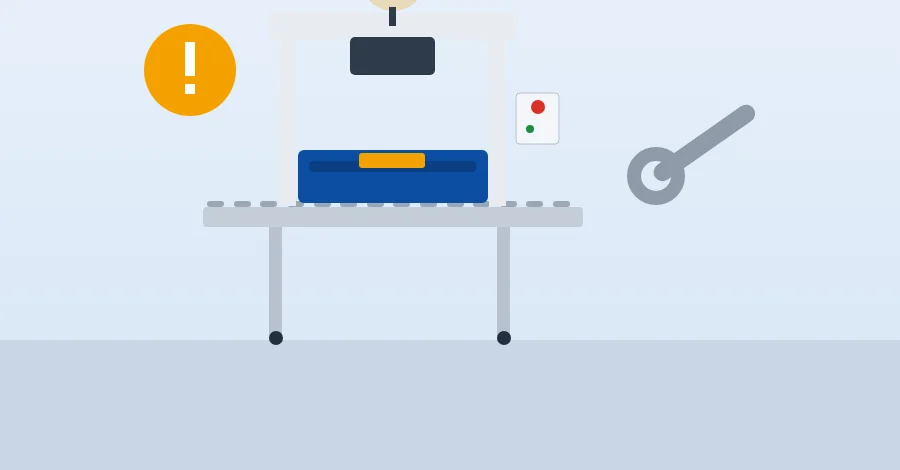
What are the carton sealer tape head parts?
The blade works with the parts around it. When one wears, the others start to look faulty.
| Part | What it does | Sign of wear | When to change |
|---|---|---|---|
| Cutter blade | Pierces and snaps the tape | Ragged ends after cleaning | When cleaning no longer helps |
| Blade guard | Covers the teeth between cartons | Slow return, bent edge | As soon as it fails to cover |
| Blade arm spring | Drives the blade into the tape | Blade meets tape gently, tails stretch | When return feels weak |
| Front applying roller | Presses tape onto the leading face | Flat spots, hard glazed surface | When the front leg lifts |
| Rear wipe-down roller | Smooths the tail after cutting | Rear legs peeling | With the blade, if worn |
| One-way roller and tension adjuster | Keep tape tight and stop it running back | Tape creases or slips | When tension will not hold |
Guide rollers and the roll hub rarely wear, but a roll that wobbles on its hub makes tape track crooked.
Should you change the blade and roller together?
Often, yes. A worn roller lets the tape sit loosely as it reaches the cutter, and a brand-new blade then tears instead of cutting. Changing one without the other is a common reason the fault returns within a week. Each time the blade comes out, spin the rollers beside it by hand and look for flat spots or glaze.
When several head parts are worn at once, a complete top or bottom tape head assembly can be the cheaper repair. For models in our range we confirm in writing what the assembly includes before you order.
Which spare blade fits your PackForge model?
Tape heads differ in width from model to model, and a head part that looks the same on two machines often is not. Part numbers are not printed on this page. Send the model name or SKU and a photo of your old blade on WhatsApp to +91 95822 69346, and the matching blade is confirmed before dispatch.
| Model | Tape widths its heads take |
|---|---|
| 102TUS | 36 or 48 mm |
| 102TU and 102PLS | 50 or 76 mm |
| 102TR and 5050Z | 48, 60 or 76 mm |
| 5050J | 60 or 76 mm |
| Compact, semi automatic and auto size adjust | Send the model and a photo |
Order blades, rollers and springs from carton sealer spares, which also covers machines bought from other suppliers when a part crosses over.
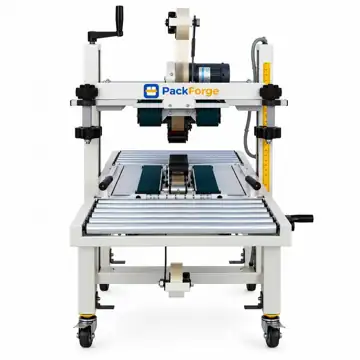
How long does a carton sealer blade last?
There is no fixed figure. Blade life depends on the tape grade, the carton count and how often glue is cleaned off. Keep one spare blade per head at the bench, so a dull cutter costs minutes rather than a day waiting for a courier. Note each change in a maintenance log; over a few months it shows your real interval.
Blades are wear parts and sit outside the 12-month warranty against manufacturing defects. Belts wear on their own schedule, covered on the belt replacement page, and a full routine for the machine is in our carton sealer maintenance guide.
Blade guard checks every operator should do
- At the start of each shift, with power off, push the guard open and let it go. It should cover the teeth fully and at once.
- Look for a bent guard edge, which can catch the tape and drag it.
- Never tape, tie or wedge the guard open to stop it touching the tape.
- A missing or broken guard means the machine stops until it is fixed.
If cuts stay poor after a new blade and a good guard, work through the carton sealer troubleshooting guide for tension and tape faults.
Questions buyers ask
Is a case sealer blade the same as a carton sealer blade?
Yes. Case sealer is the usual American name for a carton sealer, so a case sealer blade is the same cutter. Blades still differ between models, so match yours by model name and a photo, not by the name alone.
Can a blunt carton sealer blade be sharpened?
We do not suggest it. Serrated teeth are hard to resharpen evenly, and an uneven edge tears tape in places. A new blade costs little compared with the cartons a poor cut wastes.
Blade badalne ke baad bhi tape theek se nahi kat raha, kyon?
Blade ulta lag gaya ho sakta hai, ya blade arm ka spring kamzor ho. Rear roller ghisa hua ho to bhi tape khinchta hai. Guard ka return aur tape tension bhi check karein.
Is the blade covered under warranty?
No. The cutter blade is a wear part, like rollers and belts, and sits outside the 12-month manufacturing warranty. Blades for every PackForge model are kept in stock at Faridabad.
Should both tape head blades be changed at once?
Change each by condition, as the top and bottom heads can wear differently. If one blade is finished after long service, look closely at the other and keep a spare for each head.
Can you supply blades for carton sealers of other brands?
Sometimes. Send the model plate and a photo of the blade in place on WhatsApp, and we will tell you plainly whether one of ours fits before you order.
What gloves should be worn when changing the blade?
Cut-resistant work gloves, which protect against the serrated teeth while letting you handle small screws. Ordinary cotton gloves give little protection and can snag on the teeth.
Need the right blade for your sealer?
WhatsApp your model name and a photo of the old blade to +91 95822 69346, or call +91 98184 38346, Monday to Saturday, 9:30 AM to 6:30 PM.
More on carton sealing machines
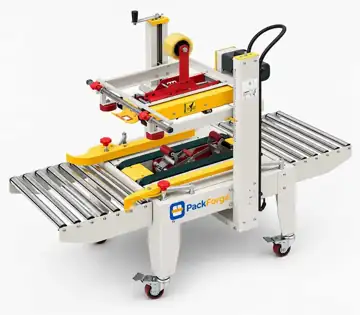 PackForge Automatic Random Carton Sealing Machine, Auto Size Adjust
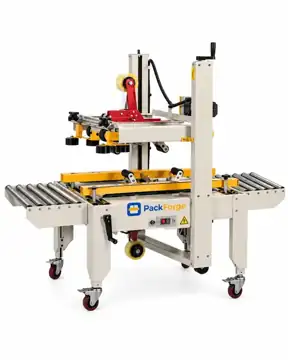 PackForge Compact Carton Sealing Machine for Small Cartons
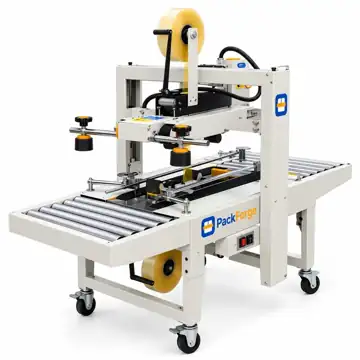 PackForge 102TR Pneumatic Automatic Carton Sealer
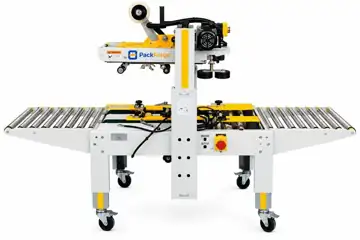 PackForge 102TU Carton Sealer (Standard Carton)
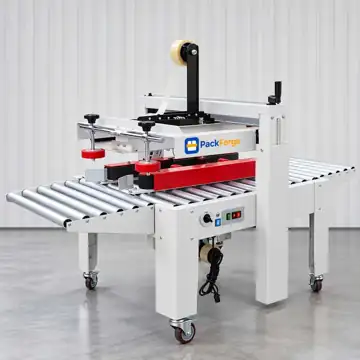 PackForge 102TUS Carton Sealer (Smaller Cartons)
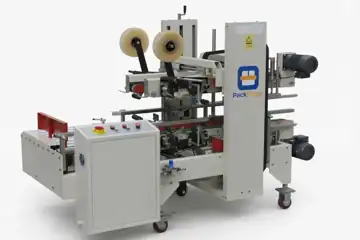 PackForge 5050J Carton Edge Sealing Machine
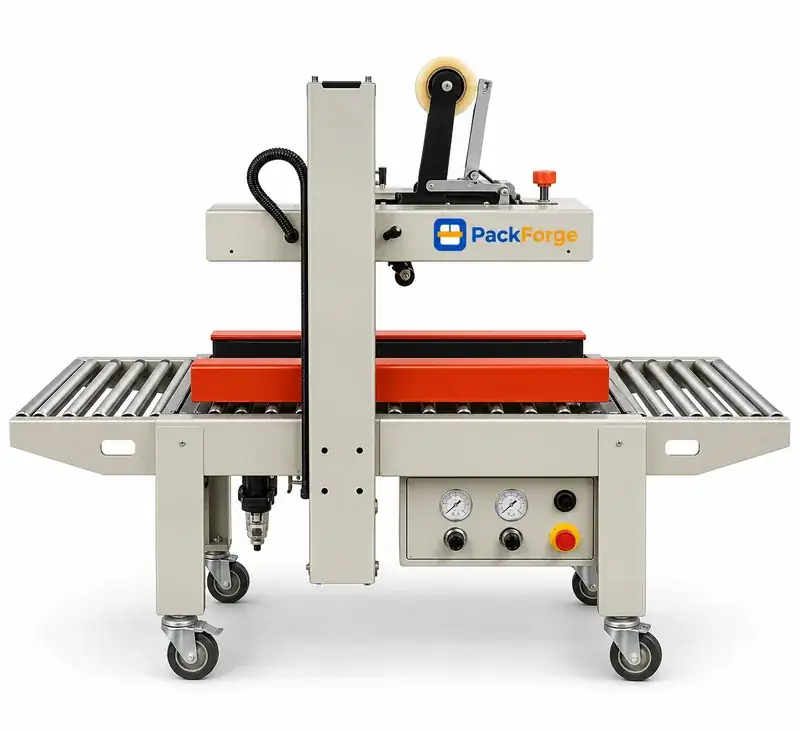 PackForge 5050Z Carton Sealer with Flap Folder
 PackForge Semi Automatic Carton Sealing Machine, Top & Bottom Tape